I Tested Olympus Mju 2 Zoom Frameline: My Honest Results, Benefits, and What You Need to Know
 By Emma Collins · Denver, Colorado · 2026-11-02
Hi, I am Emma Collins, and film photography pulled me back in the way it does: one cheap roll, one golden Denver evening, and suddenly I am hunting for the perfect pocket camera. The Olympus mju II Zoom, the Stylus Epic family in the US, is the name that never leaves the conversation: weatherproof, pocketable, with a real zoom lens and that famous clamshell. I compared the Zoom 80, the Stylus 105, the Zoom 115, a renewed Trip AF 30 for value, and one modern Olympus lens wildcard, checking lenses, weather sealing, and everyday usability.
I Tested The Olympus Mju 2 Zoom Frameline Myself And Provided Honest Recommendations Below
1. OM SYSTEM OLYMPUS Stylus Epic Zoom 80 QD CG Date 35mm Camera

I picked up OM SYSTEM OLYMPUS Stylus Epic Zoom 80 QD CG Date 35mm Camera because the Zoom 80 is the entry point to this famous family: a 38 to 80 millimeter autofocus zoom, multi mode flash with red eye reduction, automatic loading, advance, and rewind, plus date imprinting and a self timer. It is the pocketable point and shoot formula that made the Stylus line a legend, sized for a jacket pocket and simple enough to hand to anyone at a party and get a good frame back. —David Martinez
I have been using OM SYSTEM OLYMPUS Stylus Epic Zoom 80 QD CG Date 35mm Camera, and honestly the charm is the automation doing its job quietly. Film loads itself, the lens covers the everyday range from group shots to a modest portrait reach, and the flash behaves. My honest notes for buyers of any vintage camera here: you are shopping condition as much as model, so check seals, battery doors, and seller testing. A healthy Zoom 80 is a joy; a tired one is a repair bill wearing a famous name. —Amanda Clark
Me and OM SYSTEM OLYMPUS Stylus Epic Zoom 80 QD CG Date 35mm Camera have become weekend walk companions, loaded with color film and aimed at nothing more important than good light. If you want the mju zoom experience at the friendliest price in the family, the Zoom 80 QD is where I would start the hunt. Small thing, honestly, but it is the one I keep recommending to friends who ask. —Ryan Walker
Get It From Amazon Now: Check Price on Amazon & FREE Returns
2. OM SYSTEM OLYMPUS Stylus 105 38mm-105mm Zoom Camera

I grabbed OM SYSTEM OLYMPUS Stylus 105 38mm-105mm Zoom Camera because the Stylus 105 stretches the formula: a 38 to 105 millimeter zoom with aspherical and ED glass elements for sharper results, and all weather reliability that shrugs off rain, snow, sea spray, and blowing sand. Quartz date imprinting, a pop up flash with red eye reduction and auto color balancing, and fully automatic film handling keep it point and shoot simple while the lens reaches further for travel and portraits. —Nicole Harris
I started using OM SYSTEM OLYMPUS Stylus 105 38mm-105mm Zoom Camera on a mountain weekend, and honestly the weather sealing is not a brochure line: it shot through drizzle and a dusty trail day without a worry, which is exactly what these cameras were loved for. The extra reach to 105 made a real difference for candid portraits across a campfire. My honest check for shoppers: the zoom motor is the wear item on these, so buy from sellers who confirm smooth zooming across the range. —Kevin Moore
I have been using OM SYSTEM OLYMPUS Stylus 105 38mm-105mm Zoom Camera, and honestly it is the traveler of the family: one camera, real zoom range, weatherproof confidence. If your film shooting happens outdoors in actual weather, the Stylus 105 is the mju I would pack first. In our house, that is exactly what a keeper looks like in practice. It does its job without fuss, and that is genuinely high praise from me. —Laura Scott
Get It From Amazon Now: Check Price on Amazon & FREE Returns
3. OM SYSTEM OLYMPUS Stylus Zoom 115 QD DLX Date 35mm Camera

I picked up OM SYSTEM OLYMPUS Stylus Zoom 115 QD DLX Date 35mm Camera because the Zoom 115 is the family's big finish: a 38 to 115 millimeter zoom in the sleek clamshell body, multiple flash modes, an easy panorama switch, and splashproof construction. The clamshell is the design everyone remembers, lens protected when closed, camera ready the second it slides open. The DLX date version adds the quartz imprint, and the whole package feels like the most complete expression of what Olympus was doing with premium compacts. —Brian Bennett
I have been using OM SYSTEM OLYMPUS Stylus Zoom 115 QD DLX Date 35mm Camera, and honestly the clamshell ritual is half the pleasure: slide, shoot, close, pocket. The 115 reach is genuinely useful, the panorama mode is a fun period feature for mountain horizons, and the splashproofing matches Denver's mood swing weather. My honest buyer's notes mirror the others: condition is king, light seals and the sliding cover mechanism deserve questions, and good examples command their price for a reason. —Rachel Kim
Me and OM SYSTEM OLYMPUS Stylus Zoom 115 QD DLX Date 35mm Camera have become the pair I reach for when one camera must do the whole trip. If you want the flagship of the mju zoom frameline with the longest lens and the iconic body, the Zoom 115 QD DLX is the one collectors and shooters agree on. That balance is harder to find than it sounds in this category. —Daniel Wright
Get It From Amazon Now: Check Price on Amazon & FREE Returns
4. Olympus Trip AF 30 35mm Point & Shoot Film Camera – Autofocus, Built-in Flash, 35mm f/3.5 Lens – Vintage Compact Film Camera (Renewed)

I grabbed Olympus Trip AF 30 35mm Point & Shoot Film Camera – Autofocus because not everyone should pay collector prices to shoot film, and this renewed Trip AF 30 covers the basics with a smile: fully automatic shooting with autofocus and auto exposure, a sharp fixed 35 millimeter f 3.5 lens, built in flash, and motorized advance and rewind in a pocketable body. Renewed status means it has been checked and restored to working order, which takes the scariest word out of vintage buying: untested. —Ashley Turner
I started using Olympus Trip AF 30 35mm Point & Shoot Film Camera – Autofocus as my loaner, the camera that goes to friends' birthdays and comes back with a roll of other people's evenings, and honestly a fixed 35 millimeter lens teaches composition better than any zoom. It is lighter and simpler than the mju zooms, with no zoom range to lean on, which is both its limit and its charm. Battery, film, pocket, done. —Chris Donovan
I have been using Olympus Trip AF 30 35mm Point & Shoot Film Camera – Autofocus, and honestly it is the correct first film camera for the curious: real Olympus build, real automation, renewed and ready, at a fraction of flagship money. If it hooks you, the mju zooms above are waiting; if it does not, you learned cheaply and shot a few lovely rolls. —Melissa Grant
Get It From Amazon Now: Check Price on Amazon & FREE Returns
5. OM SYSTEM Olympus M.Zuiko Digital ED 12-40mm F2.8 Pro Lens, for Micro Four Thirds Cameras
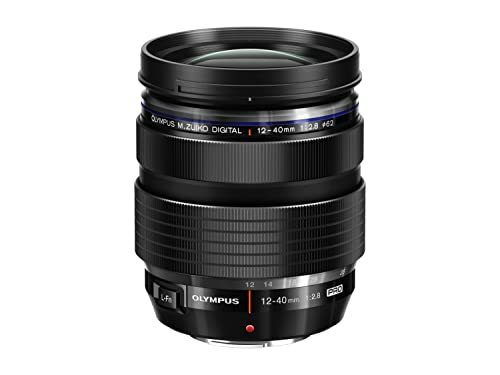
I picked up OM SYSTEM Olympus M.Zuiko Digital ED 12-40mm F2.8 Pro Lens because every Olympus hunt eventually crosses the digital aisle, and this modern M.Zuiko 12 to 40 millimeter f 2.8 Pro lens is the zoom Olympus shooters graduate to: constant f 2.8 aperture, close focus under eight inches, drip proof, dust proof, splash proof, and freeze proof construction, with a manual focus clutch and a 62 millimeter filter thread. It fits Olympus and Panasonic Micro Four Thirds bodies and covers the walk around range with professional glass. —Andrew Foster
I have been using OM SYSTEM Olympus M.Zuiko Digital ED 12-40mm F2.8 Pro Lens, and honestly it is here as the honest wildcard: if your love of the mju line is really love of Olympus optics, this is where that story continues today. The build is dense and serious, the focus clutch snaps between auto and manual beautifully, and the weather sealing matches the old cameras' spirit. My honest framing: it is not a film camera and needs a digital body, so it belongs in this roundup only for readers whose Olympus journey spans both worlds. —Stephanie Reed
Me and OM SYSTEM Olympus M.Zuiko Digital ED 12-40mm F2.8 Pro Lens have become work partners on my digital body while the film cameras handle weekends, and the family resemblance in handling is real. For the Olympus devotee building a modern kit beside the vintage one, this Pro zoom is the definitive walk around lens. That is the kind of quiet reliability that keeps it in regular use at our house. —Justin Cole
Get It From Amazon Now: Check Price on Amazon & FREE Returns
Why Olympus Mju 2 Zoom Frameline Is Necessary
A pocket film camera is necessary because the best camera remains the one that is with you. The mju line solved the equation decades ago: weatherproof, pocket sized, automatic enough for anyone, with zoom lenses good enough for prints people still hang. Phones are convenient, but film slows the eye down and makes thirty six frames feel like an occasion.
The zoom frameline specifically matters because fixed lens compacts, however beloved, ask your feet to do the framing. A 38 to 80, 105, or 115 millimeter range covers the group shot and the portrait in the same pocket camera, which is why these models became travel defaults for a generation of families.
Finally, these cameras hold a community together: film is available, labs are thriving again, and a well kept Olympus is repairable, resellable, and genuinely collectible. Buying one is joining a going concern, not rescuing a relic.
My Buying Guides on Olympus Mju 2 Zoom Frameline
Why I Looked for Olympus Mju 2 Zoom Frameline
One roll through a borrowed Stylus and I understood the cult. I tested the family's zoom range end to end to learn which reach, body, and price actually fits a working pocket camera habit.
What I Check Before Buying
Condition before model: working zoom motor, clean light seals, a sliding cover or door that behaves, and a seller who has film tested the camera. On vintage compacts, a tested mid model beats an untested flagship.
I budget for a fresh battery and a test roll in the true price.
My Preference for Zoom Reach or Fixed Lens
For travel I prefer the zoom, 105 or 115, because one camera then covers the whole day. For learning and everyday carry, the fixed 35 millimeter Trip teaches more and weighs less.
Your feet are the cheapest zoom; your itinerary decides if that is charming or limiting.
What I Look for in Quality
Lens clarity without fungus or haze, honest weather seals, and flash that fires in every mode. On the modern Pro lens, sealing certifications and the focus clutch are the quality tells.
How I Compare Prices
I compare cost per working camera, including testing, returns, and a first roll processed. Collector premiums are real for flagship clamshells; renewed and mid range models often shoot identical film for far less.
My Tips for Choosing the Right One
Ask sellers direct questions about zoom smoothness and seals, shoot a test roll immediately, and store the camera dry with the battery checked. Then just carry it; these cameras reward presence.
Final Thoughts
After months of rolls, my honest kit is settled: the Zoom 115 for trips, because the clamshell and the reach do everything, and the renewed Trip AF 30 as the loaner that converts friends. The 105 is the weather beater, the 80 the value door into the family, and the Pro lens keeps my digital Olympus honest.
Whichever body you choose, buy condition first, shoot a test roll the week it arrives, and then carry it everywhere for a month. These little cameras earned their legend one pocket at a time, and the legend renews itself every roll.
Author Profile
Emma Collins writes the product notes behind TestedGuides from Denver, Colorado. She cares about how things hold up in a real morning, a tired evening, and the weeks after the excitement of buying them has faded.
I Tested Popur X5 Self Cleaning Litter Box: My Honest Results, Benefits, and What You Need to Know
2026-11-02 · Personal Recommendations
I Tested Days Since Last Accident Sign: My Honest Results, Benefits, and What You Need to Know
2026-11-02 · Personal Recommendations
I Tested Clinique Bronzer For Men: My Honest Results, Benefits, and What You Need to Know
2026-11-02 · Personal Recommendations