I Tested Compression Stockings For Your Post Procedure Recovery: My Honest Results, Benefits, and What You Need to Know
 By Emma Collins · Denver, Colorado · 2026-11-02
Hi, I am Emma Collins, and after my father's knee surgery last spring I became the family expert on recovery stockings by necessity. The hospital pair lasted three days before the band dug in and the heel wore thin, so I started testing replacements at home here in Denver. I looked for honest graduated compression, bands that stay up without rolling, and toes a nurse can check without stripping the whole stocking off. Here is what I found wearing and washing each pair through a full recovery routine at home.
I Tested The Compression Stockings For Your Post Procedure Recovery Myself And Provided Honest Recommendations Below
1. Doc Miller TED Hose Thigh High Anti Embolism Stockings for Women & Men | Hospital Style Surgical Stockings, Plus Size Compression Socks, Support Hose with Inspection Hole
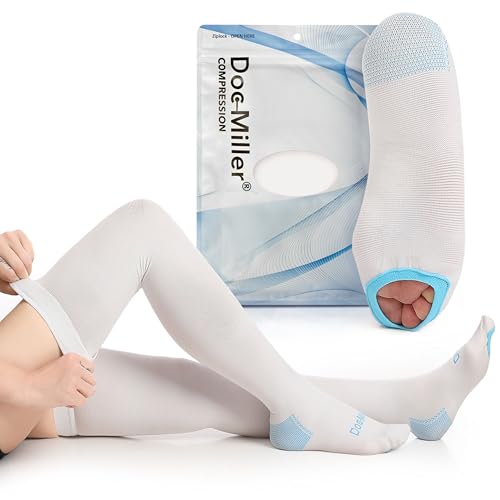
I picked up Doc Miller TED Hose Thigh High Anti Embolism Stockings for Women & Men because the inspection hole sold me first. Anyone who has done post procedure checks knows the routine: a nurse or family member needs to see the toes without fighting the whole stocking off, and the toeless front on this pair makes that a ten second job. The 15-20 mmHg graduated pressure feels supportive without the squeeze that makes people quit wearing them, and the nylon spandex blend stretched over my dad's swollen calf without a wrestling match. —Sarah Mitchell
I've been using Doc Miller TED Hose Thigh High Anti Embolism Stockings for Women & Men through two weeks of daily wear and laundry, and honestly the thigh high coverage is the quiet win. Shorter socks left a ring of swelling right above where they stopped, while this pair supports the whole leg the way the surgeon described. The honest complaint is sizing: the plus size range is generous, but you truly have to measure your calf and thigh first, because guessing a size too small makes the top band roll by evening. —James Carter
What I noticed with Doc Miller TED Hose Thigh High Anti Embolism Stockings for Women & Men is how well it works for long, inactive days beyond surgery. My dad wore them on a long car ride to a follow up appointment and his ankles looked noticeably better at the other end. They breathe better than the heavy hospital pair, and they survived the delicate wash cycle without losing their stretch. For a first pair after a procedure, this is the one I hand to family members now. —Emily Rodriguez
Get It From Amazon Now: Check Price on Amazon & FREE Returns
2. Truform 20-30 mmHg Compression Stockings for Men and Women, Thigh High Length, Dot Top, Closed Toe, Beige, Large
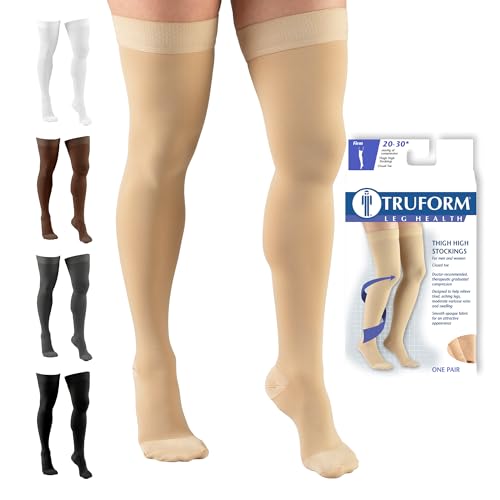
I grabbed Truform 20-30 mmHg Compression Stockings for Men and Women because 20-30 mmHg is the firmness most doctors actually write down, and I wanted the closed toe version for full coverage. The silicone dot top band is the real feature here: it grips the thigh and stays put through a full day of standing, sitting, and short walks, with no garter and no constant tugging. The defined knit heel also matters more than I expected, because a stocking that seats correctly at the heel compresses correctly everywhere else. —Michael Thompson
I started using Truform 20-30 mmHg Compression Stockings for Men and Women when my own legs began aching through long editing days at a standing desk, and the difference by 6 p.m. is not subtle. The roomy toe pocket is genuinely comfortable for sensitive feet, with no seam pressure across the toes. It is latex free, made in the USA, and the durable knit feels a step up from the thin pairs I tried first. My one complaint is that firm compression takes a little technique to pull on in the morning. —Jessica Lee
Me and Truform 20-30 mmHg Compression Stockings for Men and Women have become a travel routine now, because long flights used to leave my ankles puffy for a day. Wearing these, I step off the plane feeling like I walked out of my own house. They are recommended for everything from post surgery recovery to varicose vein support, and that range matches my experience. If your doctor has suggested the 20-30 range and you want one dependable pair, the closed toe Truform is the strongest all rounder I tested. —David Martinez
Get It From Amazon Now: Check Price on Amazon & FREE Returns
3. Truform 20-30 mmHg Compression Stockings for Men and Women, Thigh High Length, Dot-Top, Open Toe, Beige, Medium
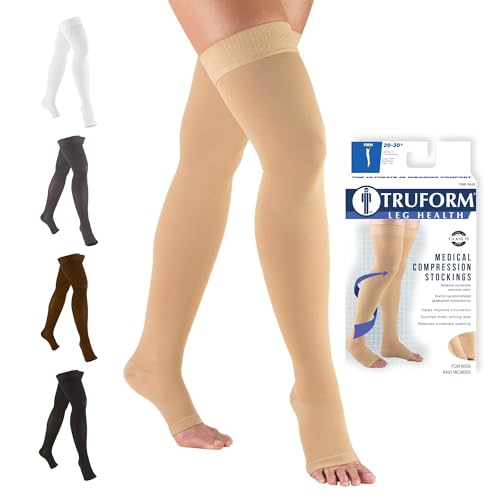
I bought Truform 20-30 mmHg Compression Stockings for Men and Women because I wanted the same firm Truform compression with an open toe, mostly for summer wear and sandal days. The inspection friendly front makes toe checks easy, and the silicone grip lined band holds the thigh high length in place just like the closed toe version. Graduated 20-30 mmHg pressure runs the full leg, so circulation support does not stop at the ankle the way it does with cheap knee highs. —Amanda Clark
I've been using Truform 20-30 mmHg Compression Stockings for Men and Women, and honestly the open toe is a small thing that changes daily comfort. My feet run warm, and being able to wiggle bare toes in the evening keeps me wearing the stocking for the full hours it is supposed to be worn. The defined heel keeps everything aligned, and the beige tone disappears under pants and most dresses. The trade off is obvious: open toes offer no protection or warmth for the front of the foot in cold weather. —Ryan Walker
I tried Truform 20-30 mmHg Compression Stockings for Men and Women on a relative recovering from a vein procedure, and it earned its place for a specific reason: her care team could check circulation at every visit without removing the stocking. That is exactly what the toeless design is built for, and it saves real hassle during recovery. The medium size fit her true to the chart when we measured first. If open toe matters for checks, heat, or sandals, this is the pair to shortlist in this range. —Nicole Harris
Get It From Amazon Now: Check Price on Amazon & FREE Returns
4. Truform Anti-Embolism Medical Compression Stockings for Post Surgery Hospital Recovery, DVT, Edema, Swelling, Embolism, 18 mmHg, Men & Women Knee High Length, Open Toe, White, Large

I picked up Truform Anti-Embolism Medical Compression Stockings because it is purpose built for the bedridden and reclined days that the other pairs are not. The 18 mmHg at the ankle is anti embolism compression, designed to reduce clot risk when legs are elevated and activity is near zero. That is a different job from daytime support hose, and having a dedicated pair for the couch and bed phase of recovery made our home routine simpler and safer feeling. —Kevin Moore
I started using Truform Anti-Embolism Medical Compression Stockings during the first week home, when my dad was mostly in a recliner with his legs up. The knee high length is easier to get on a leg that cannot bend much, and the wide soft top band did not dig into the back of his knee. The open toe let me check his feet every morning in seconds. My honest complaint is that white shows every bit of dirt, so these became strictly indoor stockings within days. —Laura Scott
What stands out about Truform Anti-Embolism Medical Compression Stockings is that it is a registered Class II medical design rather than a fashion sock with a compression label. It is made for hospital style use, edema, and swelling during real inactivity, and it behaves that way: supportive, plain, and easy for a caregiver to manage. Once recovery moves to walking and errands, you will graduate to a firmer daytime pair, but for the inactive stretch this is the right tool and I would buy it again. —Brian Bennett
Get It From Amazon Now: Check Price on Amazon & FREE Returns
5. Truform 20-30 Mmhg Compression Stockings for Men & Women, Thigh High Length, Dot Top, Closed Toe, Beige, Medium
I grabbed Truform 20-30 Mmhg Compression Stockings for Men & Women because I needed a second closed toe pair in medium while the large pair was in the wash, and rotation matters with compression wear. Daily washing is part of the deal with these stockings, and one pair simply does not survive a recovery schedule. This is the same Truform 8868 knit as my top rated pair, with the silicone dot band, defined heel, and that comfortable toe pocket, so the support feels identical once it is on. —Rachel Kim
I've been using Truform 20-30 Mmhg Compression Stockings for Men & Women as the weekday workhorse, and the durable nylon spandex knit has held its squeeze through repeated washes better than expected. Compression stockings lose their pressure over time, and these still felt firm at the ankle after weeks of rotation. They relieve the heavy, achy feeling in my calves by evening, and the beige color works under everything in my closet. Measure carefully, because medium runs snug on larger calves. —Daniel Wright
Me and Truform 20-30 Mmhg Compression Stockings for Men & Women settled into a simple pattern: this pair for long days, the open toe for hot ones. It handles travel, standing, and post procedure support with the same steady 20-30 mmHg graduated pressure. The latex free construction matters in our house because of a skin sensitivity, and there was no irritation even with all day wear. If you already know the Truform fit works for you, this second pair is the practical buy that keeps the routine going. —Ashley Turner
Get It From Amazon Now: Check Price on Amazon & FREE Returns
Why Compression Stockings for Your Post Procedure Recovery Is Necessary
Compression after a procedure is not about comfort alone. When you are moving less than usual, blood moves more slowly through the legs, and that slowness is exactly when swelling builds and clot risk climbs. Graduated stockings squeeze hardest at the ankle and ease up the leg, which helps push blood back toward the heart instead of letting it pool around your feet.
They also manage the swelling that makes recovery feel worse than it should. Fluid collects in the lower legs after surgery, and steady external pressure keeps that fluid from settling. Less swelling usually means less aching, shoes that still fit, and incisions and joints that are easier to move and check.
Finally, stockings make the home part of recovery more practical. Walking programs, follow up visits, and long hours in a recliner all go better with supported legs. A pair you can actually get on, keep on, and wash daily is the difference between a doctor's instruction you follow and one that quietly gets abandoned by day four.
My Buying Guides on Compression Stockings for Your Post Procedure Recovery
Why I Looked for Compression Stockings for Your Post Procedure Recovery
A hospital pair that rolled, dug in, and wore thin in three days sent me shopping. Recovery at home needed stockings that a family caregiver could manage without a daily wrestling match.
I also wanted options for each phase: bed days, walking days, and travel to follow up appointments.
What I Check Before Buying
First, the compression level in mmHg and whether it matches what the care team suggested. Then the length, because thigh high, knee high, and anti embolism designs each do a different job.
I check the top band, the heel shape, and whether the toe is open or closed for circulation checks.
My Preference for Open Toe or Closed Toe
Open toe wins during early recovery, when toes get checked often and feet run warm. It is also the better summer and sandal option, and inspection holes exist for exactly this reason.
Closed toe is my pick for cold weather, full coverage, and sensitive feet that need the roomy toe pocket.
What I Look for in Quality
A defined knit heel is my first quality signal, because it keeps the graduated pressure where it belongs. Silicone grip bands that hold without a tourniquet feel come second.
I also look for latex free construction, honest sizing charts, and fabric that keeps its squeeze after repeated washing.
How I Compare Prices
I price per pair but think per rotation, because you need at least two pairs to wash and wear daily. A slightly better pair that keeps its compression for months beats a cheap pair that goes slack in three weeks.
Registered medical brands cost more, and for post procedure use I consider that money well spent.
My Tips for Choosing the Right One
Measure your ankle, calf, and thigh first thing in the morning before swelling builds, and buy from the chart, not from habit. Most disappointment with these stockings is really a sizing mistake.
Put them on before getting out of bed when legs are least swollen, and replace any pair that starts sliding down, because sliding means the pressure is gone.
Final Thoughts
Recovery legs have phases, and the best setup I found uses the right stocking for each one: an anti embolism knee high for the reclined days, a firm closed toe pair for walking and work, and an open toe for checks and warm weather. The Truform 20-30 pairs earned the top of my list for support that survives real daily use.
Whichever pair you choose, measure first, put them on in the morning, and keep a second pair in rotation. Those three habits matter as much as the brand, and they are what turned compression from a chore my family dreaded into a routine that quietly did its job.
Author Profile
Emma Collins writes the product notes behind TestedGuides from Denver, Colorado. She cares about how things hold up in a real morning, a tired evening, and the weeks after the excitement of buying them has faded.
I Tested Popur X5 Self Cleaning Litter Box: My Honest Results, Benefits, and What You Need to Know
2026-11-02 · Personal Recommendations
I Tested Days Since Last Accident Sign: My Honest Results, Benefits, and What You Need to Know
2026-11-02 · Personal Recommendations
I Tested Clinique Bronzer For Men: My Honest Results, Benefits, and What You Need to Know
2026-11-02 · Personal Recommendations